
What Can You See in the Night Sky in Tenerife in September 2026?
September is one of the most rewarding months for stargazing in Tenerife. The warm summer nights continue, the brilliant centre of the Milky Way remains visible during the first part of the evening, and the autumn constellations begin to appear in the east. High above the clouds in Teide National Park, the combination of altitude, clean air and low light pollution can reveal far more stars than most visitors have ever seen before.
Whether you are joining a guided stargazing excursion, bringing binoculars or simply looking up from your accommodation, here are the highlights to watch for during September 2026.
The Milky Way: a river of stars across the sky
During September, the Milky Way is still one of the great highlights of Tenerife’s night sky. After darkness falls, its brightest summer section stretches upward from the southwest, passing through Aquila and Cygnus.
Early in the month, look towards Sagittarius and Scorpius soon after nightfall. This is the direction of the dense central region of our galaxy. From a genuinely dark location above the cloud layer, it can appear as a pale, textured band rather than a simple strip of light. Dark lanes of interstellar dust divide the glow, while binoculars reveal countless stars and clusters hidden within it.
As September progresses, the galactic centre sets earlier, so it is best observed near the beginning of an evening. The higher section of the Milky Way around Cygnus remains beautifully placed for much longer.
The Summer Triangle
Three brilliant stars dominate the September evening sky: Vega in Lyra, Deneb in Cygnus and Altair in Aquila. Together they form the large Summer Triangle.
Vega is one of the brightest stars visible from Tenerife. Deneb marks the tail of Cygnus the Swan, whose cross-shaped pattern is sometimes called the Northern Cross. Altair sits between two fainter stars and forms the southern point of the triangle.
The Summer Triangle is an excellent starting point for exploring the sky. Through a telescope, this region contains some wonderful objects, including the Ring Nebula in Lyra, the Dumbbell Nebula in Vulpecula and the colourful double star Albireo in Cygnus.
Saturn returns to the evening sky
Saturn is the best evening planet during September 2026. It becomes visible in the eastern sky later in the evening and rises earlier as the month continues. By late September it is observable for much of the night, ahead of its opposition on 4 October.
To the naked eye, Saturn looks like a steady, pale golden star. A telescope transforms the view: its famous rings become visible, together with Titan, its largest moon. The rings are still presented at a relatively narrow angle in 2026, giving the planet a noticeably different appearance from years when they are wide open.
On the night of 27 September, the bright Moon will appear close to Saturn, making the planet easier to identify, although moonlight will reduce the visibility of faint stars.
Venus after sunset
Venus shines brightly in the western evening sky during September. It is very low after sunset, so you will need an unobstructed western horizon and should look soon after the Sun has gone down. Venus reaches its greatest brilliance on 18 September and will be unmistakably brighter than any star.
Around 14 September, a young crescent Moon appears close to Venus, creating a particularly attractive twilight scene and a good opportunity for photography.
Jupiter and Mars for early risers
Jupiter and Mars are morning objects during September 2026 rather than normal evening-tour targets. They rise in the hours before dawn and can be seen towards the east.
Jupiter is the brighter of the two. Even small binoculars held steadily may reveal one or more of its four large Galilean moons. Mars appears fainter and has a warmer orange-red colour.
The waning crescent Moon passes near Mars on 6 September and near Jupiter on 8 September. These pairings will be most useful to visitors who are awake before sunrise.
Andromeda and the autumn sky
While the summer constellations remain prominent in the west, the autumn sky begins to rise in the east. The Great Square of Pegasus becomes easier to see as the evening progresses, followed by the constellation Andromeda.
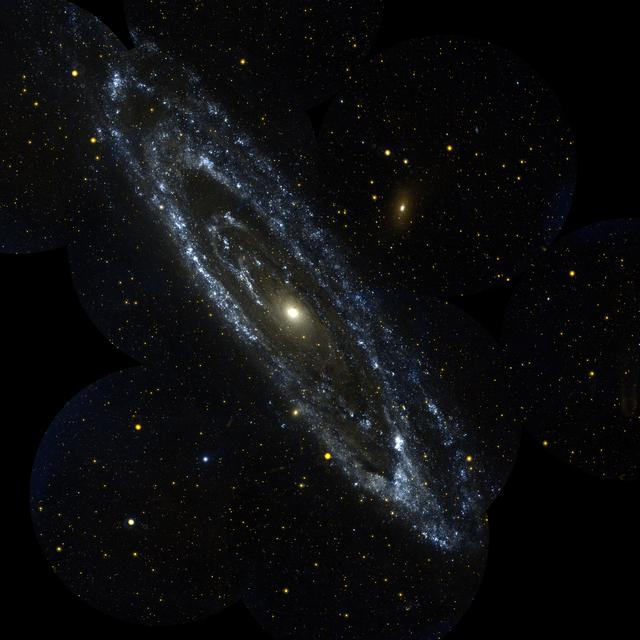
From a dark location, the Andromeda Galaxy may be visible without a telescope as a small, misty patch. It lies around 2.5 million light-years away and is the most distant object most people can see with the unaided eye. Binoculars reveal its bright central region, while telescopes and smart telescopes can begin to show its extended shape and companion galaxies.
Cassiopeia, with its distinctive W shape, climbs higher in the northeast. It lies in a rich part of the Milky Way and helps point the way towards Andromeda.
Star clusters, nebulae and galaxies
September offers a mixture of summer and autumn deep-sky objects. Depending on the time, Moon phase and equipment, highlights can include:
- The Lagoon and Trifid nebulae in Sagittarius early in the evening
- The Ring Nebula in Lyra
- The Dumbbell Nebula in Vulpecula
- The Wild Duck Cluster in Scutum
- The Double Cluster between Perseus and Cassiopeia
- The Andromeda Galaxy as it rises higher later in the night
- The colourful double star Albireo in Cygnus
Some are visible through binoculars, while others need a telescope. Smart telescopes can also build up colourful images of nebulae and galaxies in only a few minutes, revealing far more colour and detail than the human eye can see directly.
The Moon in September 2026
The Moon changes the character of the night sky throughout the month. The principal lunar phases in Tenerife are:
- Last quarter: 4 September
- New moon: 11 September
- First quarter: 18 September
- Full moon: 26 September
The darkest nights are centred on the new moon, making roughly 7–16 September the best period for seeing the Milky Way and faint deep-sky objects. A few days after new moon, a slender crescent adds a beautiful feature to the early evening without overwhelming the darker sky later at night.
Near the full moon, fewer faint stars are visible, but the Moon itself becomes a spectacular observing target. Through a telescope, craters, mountain ranges and bright lunar rays are especially impressive. The most dramatic crater detail is normally seen away from full moon, along the boundary between lunar day and night known as the terminator.
The September equinox
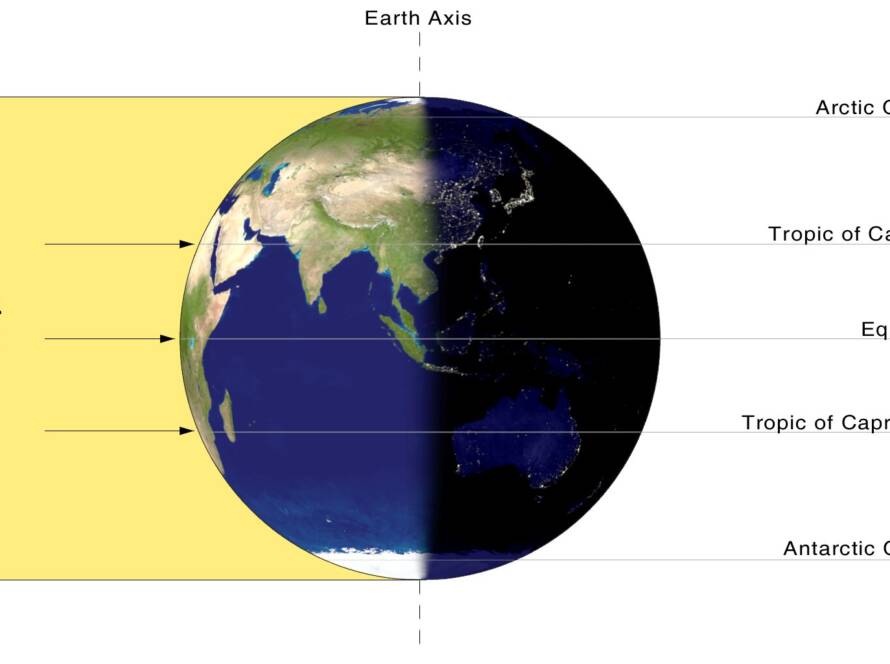
The September equinox occurs on 23 September 2026, marking the beginning of astronomical autumn in the Northern Hemisphere. Around the equinox, day and night are close to equal in length. After this date, Tenerife’s nights gradually become longer, giving stargazers more time beneath the stars.
Tips for stargazing in Tenerife
For the best experience, move away from resort lighting and allow your eyes at least 20 minutes to adjust to the darkness. Use a red torch rather than a white phone light, bring warm layers even if it is hot at sea level, and remember that temperatures in Teide National Park can fall quickly after sunset.
Never stop in an unsafe position beside a mountain road. Use established viewpoints or join an organised excursion where the observing location, equipment and changing mountain conditions are properly managed.
Explore Tenerife’s September sky with us
On a Stargazing Tenerife excursion, our guides help you recognise the major constellations, understand the stars and planets above you, and observe selected objects through astronomical telescopes. When conditions allow, we can explore everything from the craters of the Moon and Saturn’s rings to star clusters, nebulae and distant galaxies.
Every night is different, and the exact programme depends on the Moon, the planets and the clarity of the sky. That is part of the magic: the universe never presents exactly the same view twice.
Join us beneath the exceptional skies of Teide National Park and discover why September is such a wonderful month for stargazing in Tenerife.