

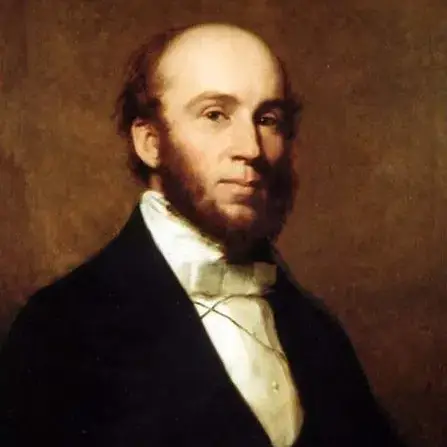
The remarkable story of an astronomer, a Victorian yacht, and a pioneering expedition to Mount Teide in 1856.
In the summer of 1856, a Scottish astronomer embarked on an extraordinary journey to Tenerife that would help change the future of observational astronomy. His name was Charles Piazzi Smyth, and his ambition was simple but revolutionary: to discover whether the stars could be observed more clearly from high above the clouds.
Today, Tenerife is recognised as one of the world’s outstanding locations for astronomy. Its high mountains, clear skies and exceptional observing conditions attract professional astronomers, astrophotographers and stargazers from around the globe.
But the scientific story behind this reputation stretches back more than 170 years, to a time when reaching the summit of Mount Teide was an adventure in itself.
A Revolutionary Idea: Astronomy Above the Clouds
Charles Piazzi Smyth was Astronomer Royal for Scotland, a position he held from 1846 until 1888.
During the nineteenth century, astronomers faced a major obstacle: Earth’s atmosphere.
Even on clear nights, atmospheric turbulence, moisture and haze could distort the light arriving from distant stars and planets. Telescopes were becoming increasingly powerful, but the atmosphere often prevented astronomers from taking full advantage of them.
Smyth believed that the solution might be found at altitude.
If an observatory could be established high on a mountain, above much of the atmosphere and the cloud layer, perhaps astronomers could obtain sharper, brighter and more reliable observations.
Tenerife, dominated by the towering volcanic peak of Mount Teide, offered an ideal opportunity to test his theory.
The Voyage to Tenerife Aboard the Titania
In June 1856, Smyth and his wife Jessie set sail for Tenerife aboard the Titania, a private yacht belonging to Robert Stephenson, the celebrated British railway engineer.
Stephenson, whose engineering achievements had helped transform Britain’s transport network, supported the ambitious scientific expedition by making his yacht available.
The journey was a considerable undertaking.
Smyth was travelling not simply as a visitor but with delicate astronomical instruments, photographic equipment and the supplies necessary to carry out observations in a remote mountain environment.
There were no modern highways climbing into Teide National Park, no comfortable mountain observatories and certainly none of the computer-controlled telescopes we use today.
Everything needed for the expedition had to be transported by sea and then carried up the volcanic slopes.
The Titania reached Tenerife in July 1856, marking the beginning of one of the most important early chapters in the island’s astronomical history.
Establishing an Observatory on Mount Guajara
Smyth’s first major observing station was established on Montaña Guajara, at approximately 2,700 metres above sea level.
Situated on the southern rim of the great Las Cañadas caldera, Guajara provided sweeping views across the volcanic landscape and a remarkable vantage point above the lower cloud layers.
Here, Smyth began testing his astronomical instruments and studying the effects of altitude on the quality of observations.
The conditions were challenging. Strong sunlight, cold nights, exposed terrain and the difficulty of moving equipment all demanded determination and ingenuity. Yet the results were encouraging.
The clearer mountain air offered substantial advantages over observing from low altitude, strengthening Smyth’s belief that high mountain locations could transform astronomy.
Higher Still: The Slopes of Mount Teide
Not content with his first observing station, Smyth moved higher, establishing another camp at Alta Vista, at approximately 3,260 metres.
At this extraordinary elevation, close to the summit of Mount Teide, the astronomer could investigate the atmosphere under even more favourable conditions.
His work included observations of stars and planets, investigations of atmospheric effects and studies of the solar spectrum.
The expedition was also remarkable for its photography.
Smyth and his wife documented the landscape and their journey using early photographic techniques, producing images that remain an important historical record of nineteenth-century Tenerife.
At a time when photography was still a relatively young technology, these images captured a volcanic island that few Europeans had seen from such extraordinary heights.
The Expedition That Helped Change Astronomy
The scientific significance of Smyth’s journey extended far beyond Tenerife.
His observations provided influential evidence that high-altitude sites could offer major advantages for astronomical research.
The idea that astronomers should place telescopes on mountains, above atmospheric haze and much of the cloud layer, became increasingly important in the development of modern observatories.
Today, some of the world’s leading astronomical facilities are located at high elevations, including those in the Canary Islands, Hawaii and Chile.
Tenerife itself is home to the internationally respected Teide Observatory at Izaña, while the nearby island of La Palma hosts the renowned Roque de los Muchachos Observatory.
Smyth could hardly have imagined the sophisticated instruments that would eventually follow his pioneering experiment.
But his 1856 expedition helped establish the scientific case for observing the universe from high above sea level.
Following in Piazzi Smyth’s Footsteps Today
For visitors to Tenerife, this remarkable history is still very much alive.
The volcanic landscapes of Teide National Park remain among the most spectacular locations in Europe for experiencing the night sky.
At Stargazing Tenerife, we take visitors high into the mountains, where the same geographical advantages that attracted Piazzi Smyth continue to provide wonderful conditions for observing the universe.
Modern telescopes allow our guests to explore the Moon, planets, star clusters, nebulae and distant galaxies in ways that Smyth could only have dreamed of.
Digital astrophotography now makes it possible to capture detailed images of objects millions of light-years away, using equipment that is far more portable and powerful than anything available in the Victorian era.
Yet the fundamental principle remains unchanged.
The higher we climb above the atmosphere’s densest layers, the better our opportunity to explore the universe.
Celebrating 170 Years of Astronomical Exploration
The year 2026 marks the 170th anniversary of Charles Piazzi Smyth’s pioneering expedition to Tenerife.
It is an anniversary worth celebrating, not only because of the scientific importance of his work, but because it reminds us how curiosity, determination and exploration have shaped our understanding of the night sky.
From a nineteenth-century yacht carrying fragile telescopes across the Atlantic to today’s remotely operated astronomical equipment, the story of astronomy in Tenerife has been one of extraordinary progress.
And every clear night on Mount Teide offers another opportunity to continue that journey.
At Stargazing Tenerife, we are proud to share the extraordinary skies and astronomical heritage of this remarkable island with visitors from around the world.
