
Discover the spectacular November night sky above Tenerife, from shooting stars and distant galaxies to some of the finest constellations of the year.
November is a wonderful month for stargazing in Tenerife. As autumn progresses, the nights become longer, the winter constellations begin to return, and several meteor showers offer opportunities to see shooting stars streaking across the sky.
High above the coastal resorts, the volcanic landscapes of Mount Teide provide a remarkable setting for exploring the universe. With little light pollution in carefully chosen locations, Tenerife offers some of Europe’s most memorable stargazing experiences.
Whether you’re visiting Tenerife on holiday, interested in astrophotography, or simply hoping to see a shooting star, here’s what to look for in November 2026.
The Leonid Meteor Shower – November’s Main Attraction
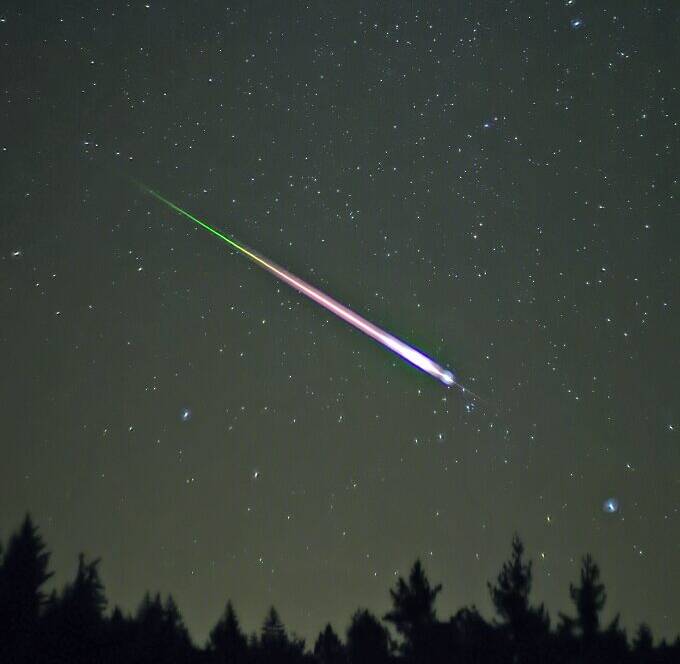
One of November’s best-known astronomical events is the Leonid meteor shower, which reaches its peak around the night of 17–18 November.
The Leonids occur when Earth passes through debris left behind by Comet 55P/Tempel–Tuttle. Tiny particles enter our atmosphere at extraordinary speeds, producing bright streaks of light that we recognise as shooting stars.
Leonid meteors are among the fastest of the major annual showers, travelling at approximately 71 kilometres per second.
Although the Leonids are famous for producing spectacular meteor storms in certain years, 2026 is expected to offer a more modest display.
Under good, dark conditions, observers may see around 10–15 meteors per hour near the peak, although actual numbers vary considerably.
The meteors appear to originate from the constellation Leo, which rises later in the night. For the best chance of seeing them, head outside after midnight and continue watching towards dawn.
You don’t need a telescope to enjoy the Leonids. In fact, the best way to observe a meteor shower is with the naked eye, allowing you to take in as much of the sky as possible.
The Taurid Meteor Showers – November’s Bright Fireballs
November also brings the Northern and Southern Taurid meteor showers.
Unlike the fast-moving Leonids, the Taurids are relatively slow meteors, travelling at approximately 27 kilometres per second. They are particularly well known for occasionally producing brilliant fireballs that can be brighter than the planets.
The Southern Taurids are active during the early part of November, while the Northern Taurids reach their broad maximum around 12 November.
Although the Taurids usually produce only around five meteors per hour under ideal conditions, their potential for bright fireballs makes them especially interesting.
The Taurids appear to radiate from the constellation Taurus, which is prominent in Tenerife’s evening sky during November.
For visitors enjoying an evening beneath the stars on Mount Teide, a bright Taurid fireball can be an unforgettable sight.
Orion Returns to the Tenerife Night Sky
One of the most recognisable constellations in the entire sky, Orion the Hunter, makes its welcome return during November.
By late evening, Orion can be seen rising in the east, becoming increasingly prominent as the month progresses.
Its distinctive belt of three bright stars makes it easy to identify, even for complete beginners.
Orion is also home to one of the most beautiful deep-sky objects visible from Earth: the Orion Nebula, also known as Messier 42.
Located approximately 1,350 light-years away, this enormous cloud of gas and dust is a stellar nursery where new stars are forming.
Under Tenerife’s dark skies, the Orion Nebula can be glimpsed with binoculars, while a telescope reveals its glowing structure and the young stars at its centre.
For astrophotographers, M42 is one of the most rewarding targets of the winter season.
The Pleiades – Seven Sisters
Another highlight of November is the beautiful Pleiades star cluster, also known as the Seven Sisters or Messier 45.
Situated in the constellation Taurus, the Pleiades are easily visible to the naked eye as a small group of bright stars.
Although most people can distinguish six or seven stars, the cluster actually contains hundreds of stars, many of which can be revealed through binoculars or telescopes.
The Pleiades are approximately 440 light-years from Earth and are particularly impressive through binoculars, which show the cluster against a rich background of stars.
November is an excellent time to observe and photograph this famous celestial object from Tenerife.
The Andromeda Galaxy – Looking 2.5 Million Years into the Past
November is also an excellent month to observe the Andromeda Galaxy, Messier 31.
At approximately 2.5 million light-years away, Andromeda is the nearest major spiral galaxy to our own Milky Way.
Under sufficiently dark skies, it can be seen with the naked eye as a faint, misty patch.
Through binoculars, its elongated shape becomes more apparent, while astrophotography can reveal its spiral structure, dust lanes and bright central region.
When you look at Andromeda, the light entering your eyes began its journey long before modern humans existed.
It is one of the most extraordinary sights available to amateur astronomers.
Why November Is a Great Month for Stargazing in Tenerife
Tenerife’s geographical position, relatively mild climate and high-altitude observing locations make it an attractive destination for astronomy throughout the year.
During November, the longer nights provide more opportunities to observe the universe.
The volcanic landscape of Teide National Park also creates a dramatic setting for stargazing, far from the bright lights of Tenerife’s main tourist resorts.
At higher altitudes, observers can sometimes find themselves above the cloud layer, enjoying clear skies while the coastal areas remain cloudy.
However, mountain weather can change quickly, and clear conditions are never guaranteed.
Temperatures around Mount Teide can become very cold after sunset, especially when the wind increases. Warm clothing is essential, even when the beaches are enjoying pleasant temperatures.
Experience Tenerife’s November Night Sky with Stargazing Tenerife
At Stargazing Tenerife, we introduce visitors to the wonders of the universe from carefully selected observing locations in the Mount Teide region.
Our guided stargazing experiences combine an introduction to the constellations with telescope observations of planets, star clusters, nebulae and distant galaxies, depending on what is visible that evening.
November is a particularly exciting time to explore the transition between the autumn and winter skies, with Andromeda, the Pleiades and the returning Orion Nebula providing some exceptional astronomical sights.
Whether you’re an experienced astronomy enthusiast or looking through a telescope for the very first time, Tenerife’s night sky offers an experience you’ll remember long after your holiday.
Join Stargazing Tenerife this November and discover the incredible universe above Mount Teide.
Clear skies from the Stargazing Tenerife team!