
The winter season starts on or around December 21st, at least what is know as ‘astronomical’ winter. As a matter of fact, there is also what is called ‘meteorological’ winter that officially starts on December 1st because meteorologists like to split the year evenly in four seasons of three months: you might feel that it feels like winter before it is called so, although these days of climate crisis it is difficult to tell sometimes…
This day is know as winter solstice (derived from the latin word solstitium or sol sistere, which means sun standing still) and it coincides with the shortest day of the year and, consequently, the longest night of the year. In London, for example, the daytime only lasts 7 hours and 42 seconds. In the Canary Islands, we are blessed with 10 hours and 22 minutes of daylight, which helps with Vitamin D intake and general wellbeing…For us, it is also the best time of the year for stargazing because we have the most darkness! It is the day when the subsolar point (the spot on the surface of the Earth exactly beneath the Sun) is at its southernmost point. It is the opposite of the summer solstice in June, where the subsolar point is at its northernmost point.
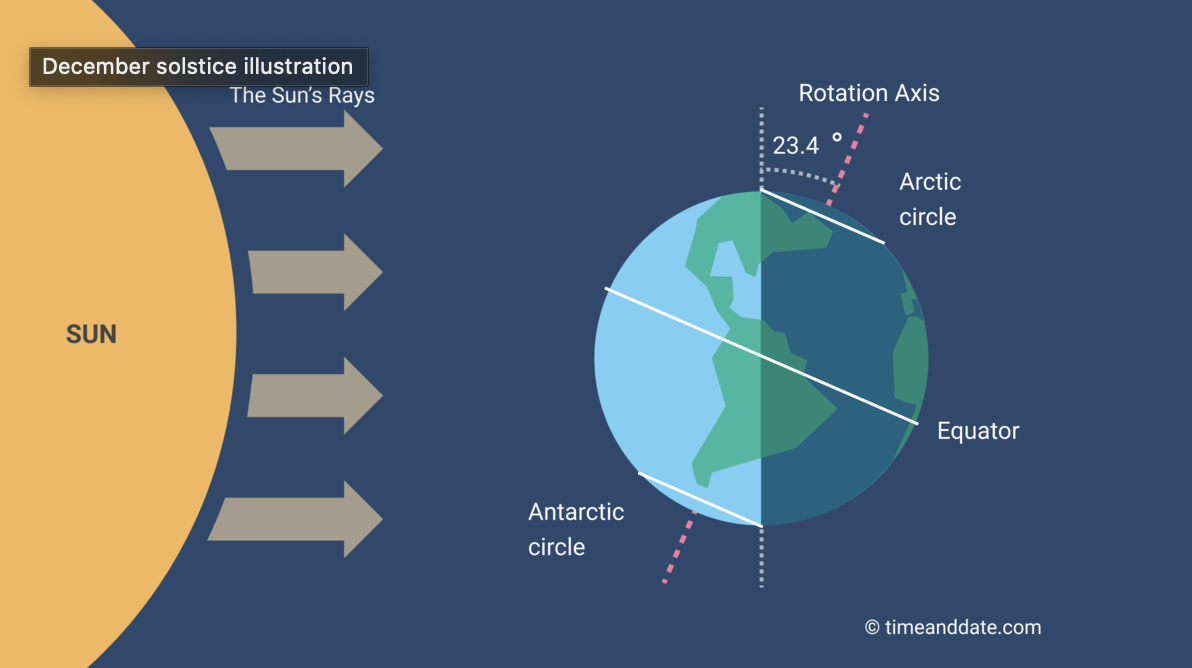
What does it mean, you may ask? well, here is your answer: our planet’s axis is tilted about 23º from the ecliptic, the plane of the planets’ orbit around the Sun. In December, the Northern Hemisphere is tilted away from the Sun so the subsolar point is below the equator, whereas in June it moves at its highest north of the equator. This means that the Sun hits more vertically and for longer time the hemisphere with the tilt facing it. Therefore, as you can imagine, when it is summer for the people living north of the equator, it is winter for those down under and viceversa, and that is why you see in the news Ozzies celebrating Christmas at the beach while most of Europe and North America is freezing.
Here in the Canary Islands we are lucky because at sea level it is still nice and warm throughout the season, but you realize that it is winter when you join our stargazing tours as temperatures get down to single digits and there is often snow on Mount Teide! (so remember to dress appropriately…)
And what happens halfway through the year, in March and September? easy enough, the subsolar point is exactly at the equator so the two hemispheres receive the same amount of daylight, and those days are called equinoxes (from the latin equi and nox, same night) with equal length of daytime and nighttime. Equinoxes also mark the beginning of the other two seasons, spring in March and autumn or fall in September.
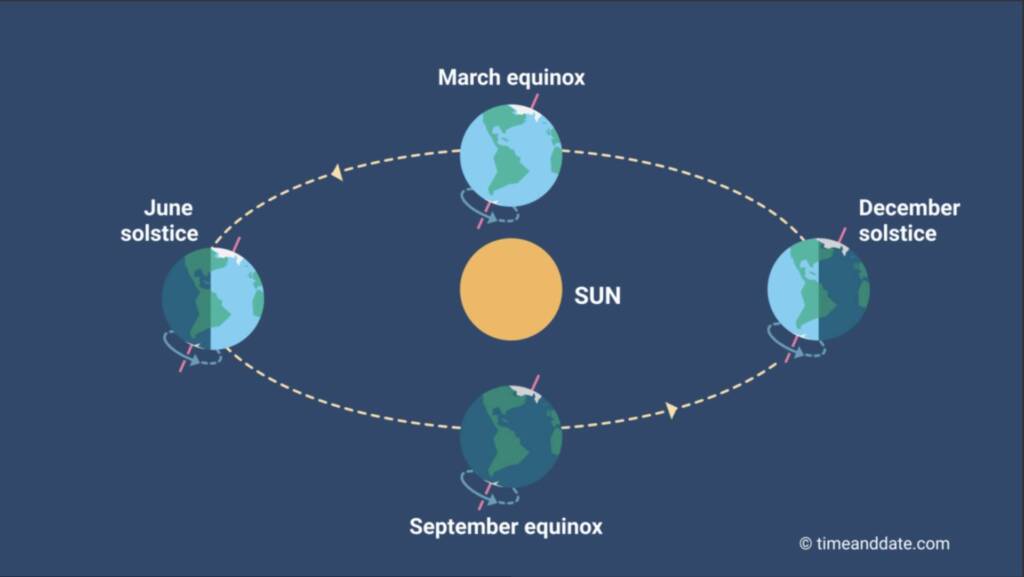
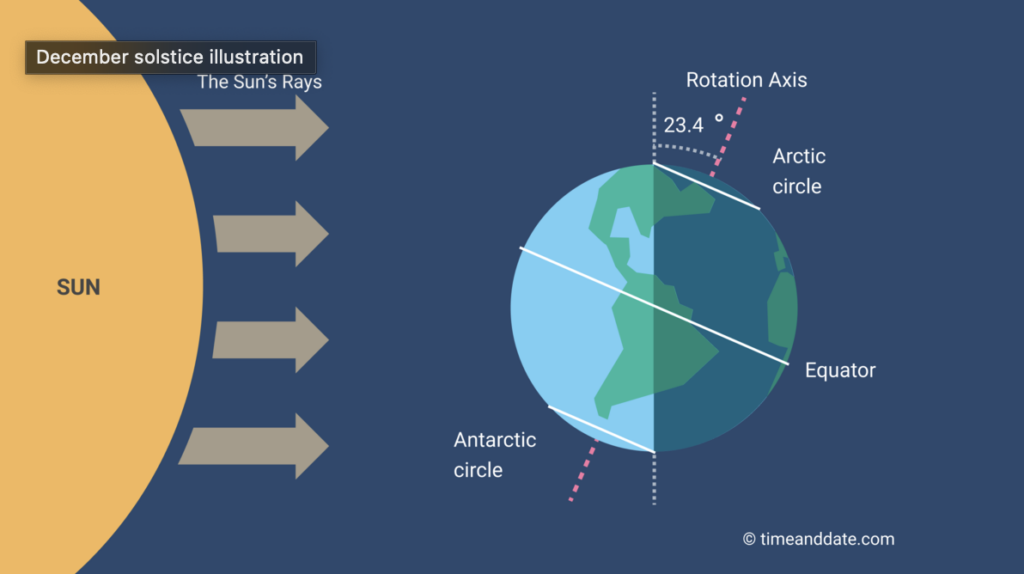
The winter solstice is usually associated with the latest sunrise and earliest sunset of the year, but actually the earliest sunset occurs a few days before the solstice and the latest sunrise some days after it. Without getting into the details, the way we keep the time and calculate days does not coincide perfectly with the rotation and motion of the Earth around itself and the Sun so there is a variation in the length of an apparent solar day that affects the times of sunrise and sunset.
When does the December solstice fall in the calendar? it can be on December 20th, 21st, 22nd or 23rd, and the reason is that our calendar does not match exactly the time the Earth completes an orbit around the Sun. The so-called Gregorian calendar has 365 days with a leap year of 366 days every four years, but it takes our planet 365.242 days to complete a circle around the Sun. And this means that the timing of the solstices slowly moves away from our calendars because they occur 6 hours later each year. As a consequence, this lag eventually falls on the next day until the leap year brings the solstice back to the earlier date.
All ancient cultures celebrated the winter solstice one way or another. Under the old Julian calendar, it occurred on December 25th (does the date sound familiar?) and, when the Gregorian calendar was introduced, it moved to December 21st but the Christian celebration of the birth of Jesus was kept on the 25th.
The ancient Romans celebrated the winter solstice with the Saturnalia festival, which started on the 17th and lasted seven days, to honor Saturn the father of the gods. They would do a lot of sacrificing, partying and general debauchery, so much so that the usual law and order would be suspended! All the other ancient civilization also celebrated the solstice in different ways.
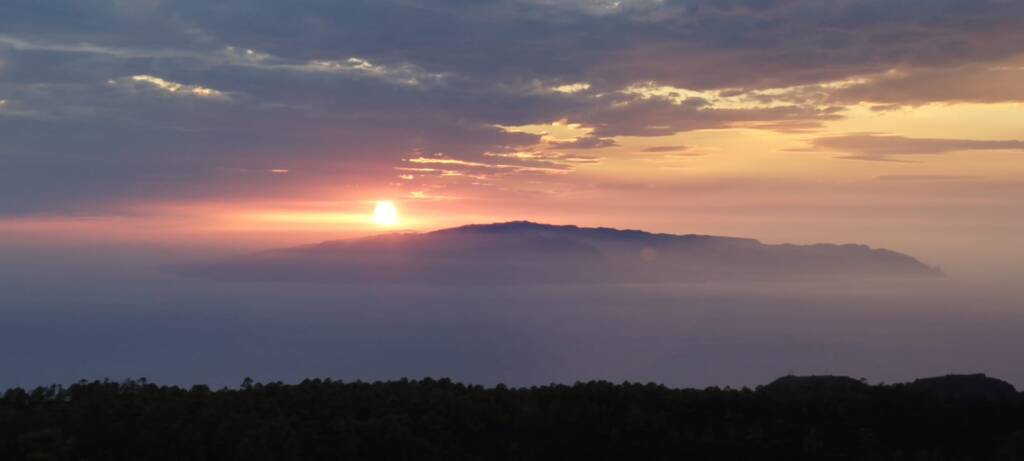
If you have been on our sunset and stargazing tours in the past few weeks, you may have noticed that the Sun sets right over the island of El Hierro, whereas if you joined our tours during the summer, it sets above the island of La Palma, quite a distance away. This phenomenon is due to the fact that the apparent path of the Sun in the sky changes over the course of the year because of the Earth’s tilt, so around the winter solstice the arc of the Sun is the smallest and at noon it is at its lowest, whereas around the summer solstice the arc is the widest and at noon the Sun is almost at the zenith (it is at the zenith at the Tropic of Cancer, which is 23.5º north of the equator).
So when we tell you that every day the sunset is different, we really mean it!
After reading this post, I hope you have a better understanding on the subject and a greater appreciation of the motion of the celestial objects that make looking at the sky so amazing!
Written by Dani