
We all love clear, starry nights, when we are able to marvel at the Milky Way and the dozens of constellations visible after dark but, no matter where we are, the weather can have a negative impact on our experience. There are some places that are better than others in that regard, where cloud coverage is not as frequent or significant to spoil our stargazing. For example, in the Teide National Park where we carry out our sunset and stargazing tours, we enjoy cloud-free conditions 85% of the year, making it one of the best places in the world for astronomy. As a matter of fact, NASA calls the sky of the Canary Islands one of the top three in the world along with Hawaii and the Atacama desert, and it is why international institutions have built very advanced telescopes in Tenerife and La Palma. There are other reasons such as low turbulence and low light pollution, but the consistency of good weather conditions is arguably the main reason why we have those observatories here.
Our worst enemies are medium and high clouds because we cannot get above them and, when the coverage is significant, it does negatively affect our tours. Low clouds are not an issue because in Tenerife we are always able to get above the cloud belt that usually stays below 1400m of elevation, which is where our sunset viewpoint is located.
Thanks to the advancements in weather forecasting science and technology, we are now able to know very accurately if our outdoor pursuit will be spoiled by a thunderstorm, for example. We are able to know when an unwanted band of clouds or a storm arrives with an accuracy of less than one hour… It is truly amazing!
We rely heavily on this technology to confirm our tours every day because, as you know, we are called Stargazing Tenerife, NOT Cloudgazing Tenerife! As a matter of fact, we are not afraid to cancel and reschedule our tours should weather conditions be adverse. Every morning the Weather Committee (Daniele with the help of Mike and Stephen) looks at several weather forecast websites and apps to make sure conditions are optimal for our stargazing tours; but because there is no silver bullet, we have to average out the information from different resources.
The first website we check for an overview of the weather is the Spanish Weather Agency AEMET (https://www.aemet.es/es/portada) that, among several products, offers a concise description of the conditions for each island on a daily basis. It is a great starting point.
After that, we zoom into the Teide National Park with Mountain Forecast (https://www.mountain-forecast.com), which summarizes what to expect at different elevations as far as temperature, cloud coverage, wind speed and direction at different elevations. It also provides weather maps but, to be honest, they are not the easiest to read.
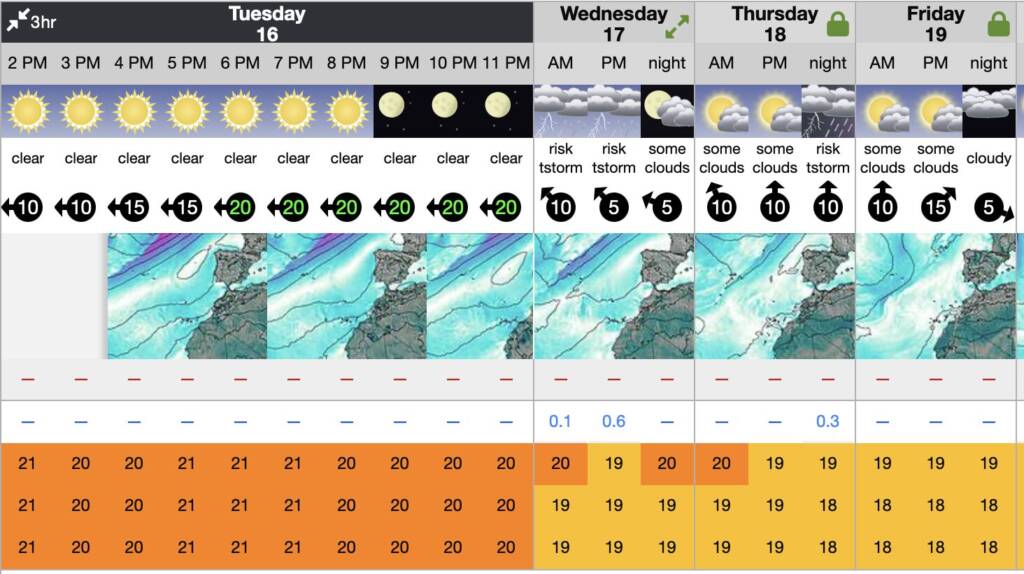
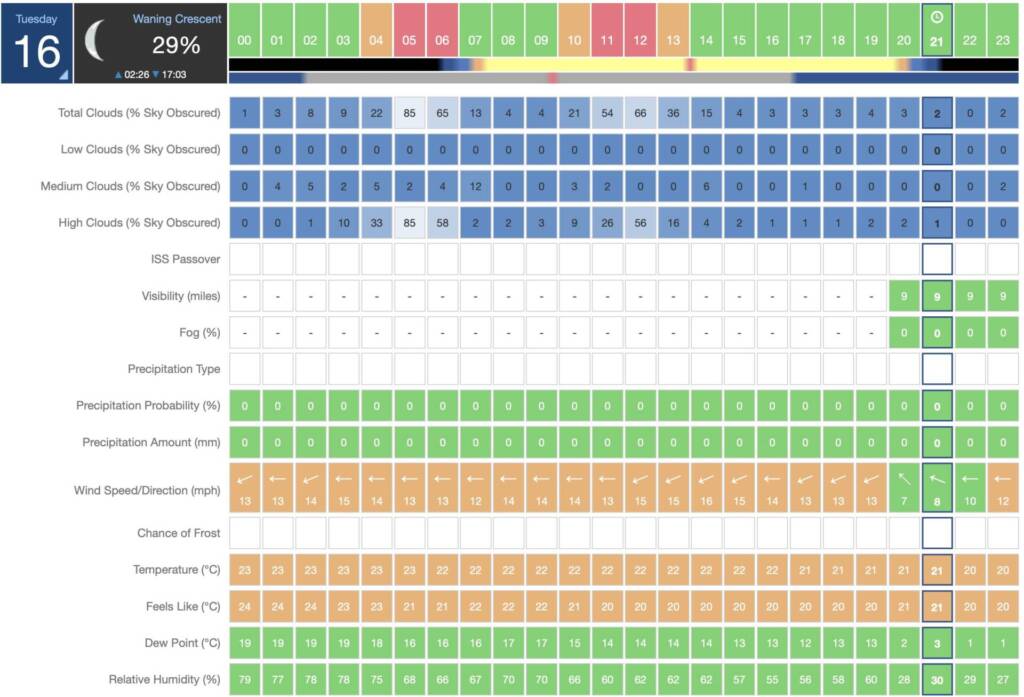
After that, we usually look at Clear Outside (https://clearoutside.com), a weather forecast website designed specifically for astronomers that gives incredibly detailed information about Moon brightness, cloud coverage by layer, precipitation probability, temperature, wind speed and direction, dew point and even the ISS passover. While often reliable, it doesn’t always get the prediction perfectly accurate, at least for the Teide National Park.
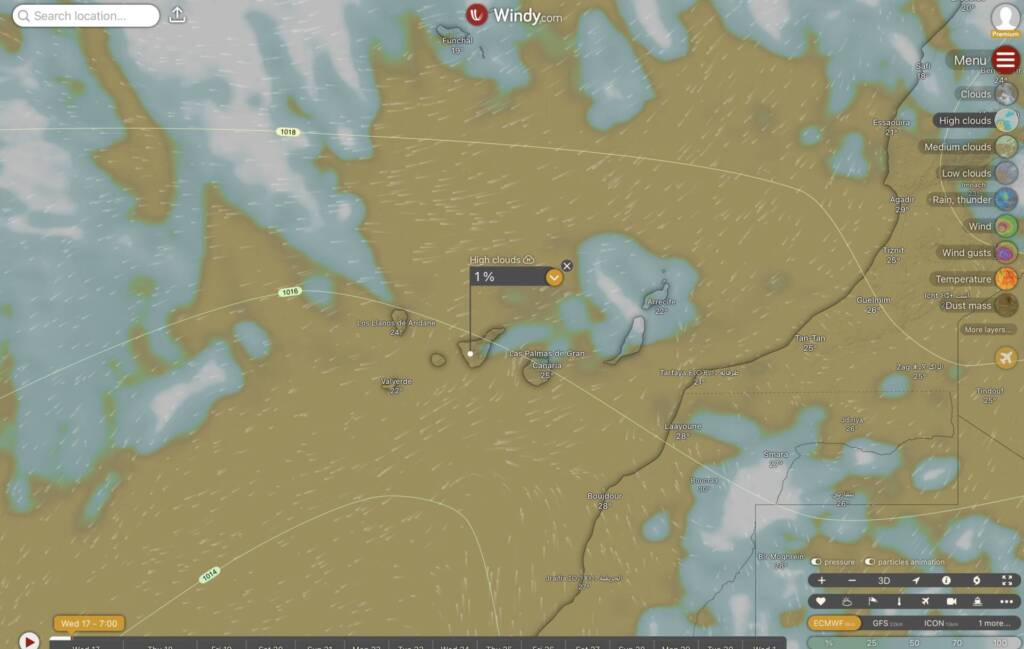
In our opinion, the most reliable resource (and most time-consuming to sift through and process) is Windy (https://www.windy.com), which elaborates ECMWF, ICON and other forecast models in a graphic way to provide maps and timelines with all kinds of data: high clouds, medium clouds, low clouds, rain, wind, temperature and other interesting bits of information. There is a free version and a paid version: we use the latter as it gives hourly changes, therefore a bit more detailed information for our needs.
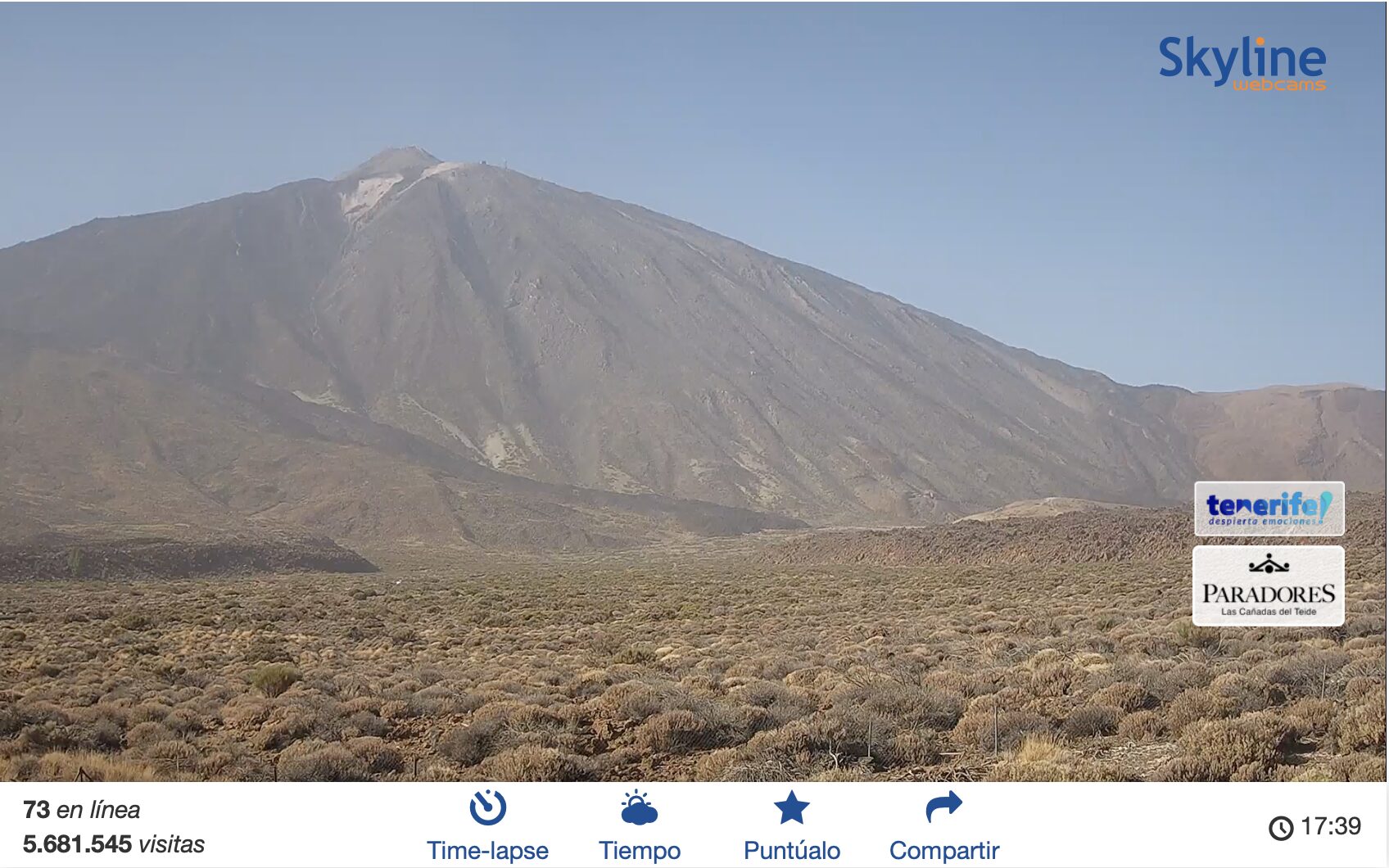
Once we digest all that information, we cross-reference it with some webcams on the island to verify that the forecast models match the actual conditions of the sky.
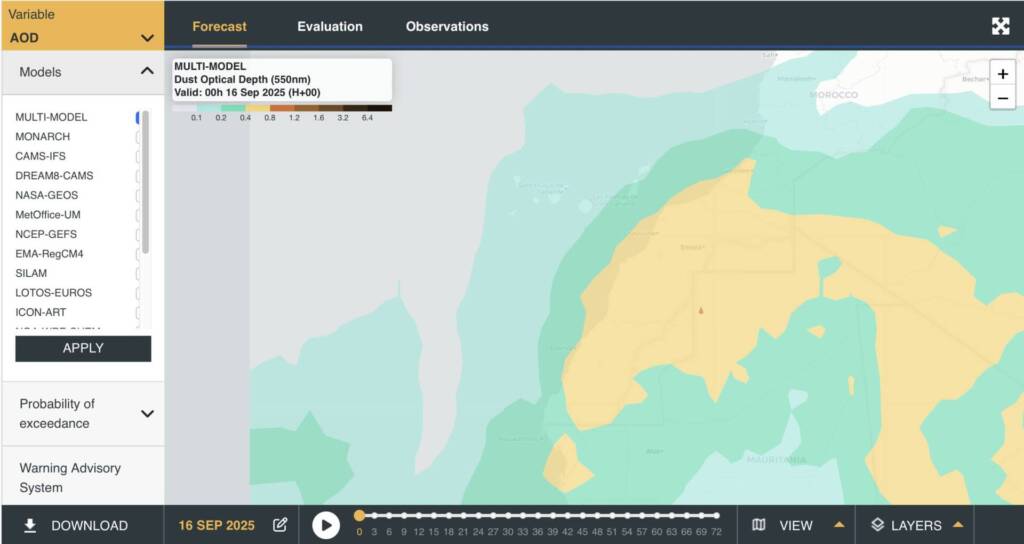
Additionally, here in the Canary Islands we have a phenomenon called ‘calima’, which is when the wind blows from the Sahara desert bringing dust and sand in the air. It does affect air quality and, occasionally, visibility. When there is a calima episode, the most reliable source is the Barcelona Dust Regional Center (https://dust.aemet.es/products/daily-dust-products), which offers many models to predict the intensity of the calima and how it will affect visibility. Unfortunately, the layer of dust can be transported through different atmosphere layers so it is difficult to predict whether it will be low or high in the sky. For this reason, during calima episodes we cross-check with the webcams frequently to have a real-time assessment of the conditions.
There are other websites that provide supplemental information, but we get pretty much all we need with the ones mentioned above.
If conditions still look uncertain for a given night, we usually wait for updates of those websites before we confirm or cancel a tour around midday. Once again, we err on the side of caution and prefer to reschedule a tour rather than show our guests some clouds. We can say with confidence that we get it right almost all the time. In the four years we have been operating, we only had to ‘abort mission’ once because a layer of clouds came out of nowhere and sat on top of the mountain all night. Sometimes Mother Nature does not look at the weather forecast… especially up on the mountain, conditions can change rapidly and unexpectedly!
We hope to have provided some interesting insight on what happens behind the scenes on any given day to make sure we tick every box and give you the best stargazing experience in Tenerife from beginning to end!